How to Use Mind Mapping for Better Brainstorming and Planning offers a transformational approach to creativity and organization. Mind mapping, a visual technique that allows individuals and teams to structure their thoughts, can significantly enhance brainstorming sessions and strategic planning. By converting complex ideas into easily digestible visuals, mind mapping not only promotes clarity but also fosters innovation and collaboration.
The historical evolution of mind mapping has seen it transition from simple hand-drawn diagrams to sophisticated software tools that streamline the brainstorming and planning process. With various applications in both personal and professional settings, mind mapping serves as an effective method to unlock creativity, improve memory retention, and enhance overall productivity.
Introduction to Mind Mapping
Mind mapping is a versatile graphical tool that aids individuals and groups in organizing thoughts, generating ideas, and planning projects effectively. It allows for the visualization of connections among various concepts, enabling a more dynamic and creative approach to brainstorming and planning. The structure of a mind map typically radiates from a central idea, supporting the development of related topics and s in an engaging manner.The concept of mind mapping has its roots in the early work of psychologist Tony Buzan, who popularized this technique in the 1960s and 1970s.
Buzan emphasized the natural ways the human brain processes information, advocating for a visual approach to note-taking that aligns with cognitive patterns. Over the years, mind mapping has evolved, incorporating various methodologies that draw on the principles of both psychology and education, resulting in a widely adopted technique utilized in diverse fields such as business, education, and personal development.
Well-Known Mind Mapping Tools and Software
Several mind mapping tools and software have emerged, providing users with a digital platform for creating and managing mind maps. These tools vary in features, accessibility, and ease of use, catering to different preferences and needs. The following are prominent examples of mind mapping tools available today:
- XMind: A comprehensive mind mapping application that offers a variety of templates and themes, allowing users to customize their maps easily. XMind supports collaboration features, making it suitable for team brainstorming sessions.
- MindMeister: A web-based mind mapping tool that facilitates real-time collaboration among users. MindMeister is particularly effective for project planning and includes features for task management integrated within the mind map.
- Coggle: An intuitive online tool that allows users to create and share mind maps easily. Its straightforward interface is ideal for beginners and offers collaborative capabilities for group projects.
- SimpleMind: This application emphasizes simplicity and flexibility, enabling users to create structured maps without overwhelming complexity. It is available on various platforms, including mobile devices.
- FreeMind: An open-source mind mapping software that is fully functional and customizable. FreeMind is particularly appealing for users looking for a cost-effective solution with a broad range of features.
These tools not only facilitate the creation of mind maps but also enhance engagement and creativity in the brainstorming and planning processes. Each tool provides unique features that cater to specific needs, making them valuable resources for individuals and teams seeking to leverage mind mapping in their work.
Benefits of Using Mind Mapping
Mind mapping serves as a powerful tool that significantly enhances the brainstorming and planning processes. By employing this technique, individuals and teams can unlock their creative potential, improve information organization, and boost memory retention, all of which contribute to more effective and efficient planning outcomes.
Enhancement of Creativity
Mind mapping inherently promotes creativity by encouraging free thinking and exploration of ideas. This technique allows for the non-linear representation of thoughts, which contrasts traditional linear note-taking methods. Through the use of colors, images, and branches, mind maps create a stimulating environment that fosters innovative thinking. The benefits of enhanced creativity through mind mapping are evident in various settings, such as:
- Facilitation of Idea Generation: The visual layout of a mind map allows users to see connections between different ideas, spurring additional thoughts and insights.
- Elimination of Mental Blocks: The informal nature of brainstorming with mind maps reduces the pressure of traditional brainstorming, enabling individuals to express ideas without inhibition.
- Collaborative Creativity: In group settings, mind mapping encourages participation from all members, as the visual format can draw out contributions from quieter members who may feel intimidated in standard discussions.
Advantages of Visual Representation
Visual representation is a fundamental aspect of mind mapping that addresses the complexity of information management. Traditional text-based note-taking can often lead to confusion, especially when dealing with intricate subjects. Mind mapping condenses complex information into easily digestible visual formats.The advantages of visual representation in mind mapping include:
- Improved Comprehension: Visual elements such as symbols and colors aid in understanding and interpreting key concepts more readily than text alone.
- Enhanced Organization: Mind maps structure information hierarchically, allowing users to see the relationships between main ideas and sub-ideas clearly.
- Facilitation of Quick Reviews: The overarching visual structure enables quick glances at the entire topic, making it easier to recall and review information efficiently.
Improvement of Memory Retention
Mind mapping has been shown to enhance memory retention and knowledge recall, making it an invaluable tool for learners and professionals alike. The combination of visual stimuli and structured thinking helps to encode information more effectively in the brain.Key factors contributing to improved memory retention through mind mapping include:
- Multi-sensory Engagement: Engaging both visual and verbal cognitive processes helps solidify information in long-term memory.
- Association and Connection: By creating connections between ideas, mind mapping fosters a deeper understanding, leading to better retention of information.
- Active Participation: The act of creating a mind map involves active engagement, which is proven to enhance learning outcomes compared to passive study methods.
Techniques for Effective Mind Mapping
Mind mapping is a powerful technique that facilitates brainstorming and planning through visual representation. By utilizing specific techniques, individuals can significantly enhance the effectiveness of their mind maps, leading to clearer thoughts and better organization of ideas. This section covers a systematic approach to designing mind maps, the integration of visual elements, and various styles of mind mapping.
Step-by-Step Guide for Designing a Mind Map
Creating a mind map from scratch involves a few clear steps that help in organizing thoughts and ideas systematically. Here is a detailed guide to assist in constructing a mind map effectively:
- Choose a Central Idea: Begin with a clear central concept or topic that will serve as the focal point of your mind map. This central idea should be placed at the center of your page.
- Add Branches: Create branches radiating out from the central idea to represent major themes or categories related to your topic. Each branch should clearly indicate a key point of discussion.
- Include Sub-Branches: For each major theme, add sub-branches that detail specific ideas or thoughts. This hierarchical structure helps in breaking down complex topics into manageable sections.
- Utilize s: Use single s or short phrases to capture the essence of each idea. This keeps the map concise and easy to read.
- Incorporate Visual Elements: Integrate colors, shapes, and images to enhance the visual appeal and memorability of your mind map.
Integration of Colors, Shapes, and Images
Incorporating visual elements into mind maps can significantly boost comprehension and retention. Colors can convey meanings and emotions, while shapes can organize information effectively. To create an engaging mind map:
- Use different colors for branches to differentiate between categories or to signify the importance of ideas. For example, red can denote critical points, whereas blue can represent less urgent ideas.
- Employ various shapes to categorize information visually. Circles can represent main ideas, while squares can signify s or related thoughts.
- Add relevant images or icons alongside s to create visual associations, which can aid in memory retention. For instance, using a light bulb icon can symbolize a new idea, while a question mark may denote unresolved queries.
Incorporation of Different Styles of Mind Maps
Mind maps can take various forms depending on the purpose and preference of the user. Understanding different styles allows for greater flexibility and usability. Two common styles are radial and hierarchical mind maps:
Radial Mind Maps
These maps extend outward from the central idea in all directions, allowing for a free-flowing representation of thoughts. This style is ideal for brainstorming sessions, where ideas can branch out without a strict order.
Hierarchical Mind Maps
These maps follow a more structured approach, where ideas are organized in levels of importance. The central idea remains at the top, with branches cascading downward, making it suitable for outlining processes or project planning.These techniques and styles not only improve the clarity of ideas presented but also foster creativity, making mind mapping an invaluable tool for both individual and collaborative brainstorming efforts.
Applications of Mind Mapping in Brainstorming
Mind mapping serves as a powerful tool in brainstorming sessions, enabling teams to visualize their thoughts and ideas more effectively. By breaking down complex subjects into manageable components, mind maps create an engaging and interactive environment conducive to creativity and collaboration. The following sections will explore practical applications of mind mapping in team brainstorming sessions, strategies for integrating mind maps into projects or presentations, and a list of brainstorming topics that can be effectively visualized using mind maps.
Team Brainstorming Sessions
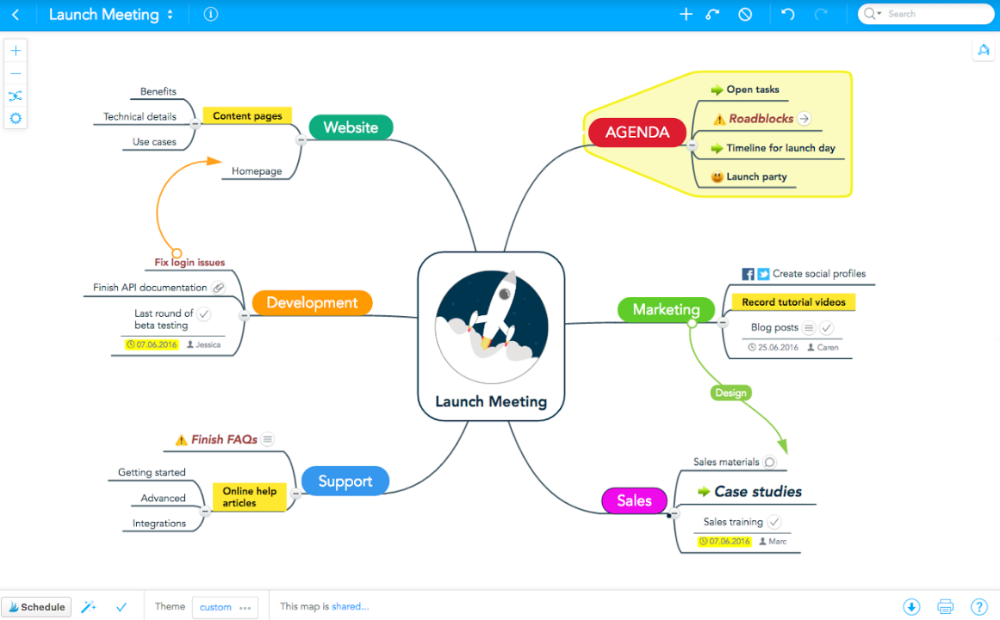
In team brainstorming sessions, mind mapping can facilitate the generation and organization of ideas. For example, when a group is tasked with launching a new product, a central theme such as “New Product Launch” can be placed at the center of the mind map. Branches can then represent different aspects of the launch, such as marketing strategies, target audience, budget considerations, and distribution channels.
Each of these branches can further subdivide into more specific ideas, fostering a comprehensive overview of the discussion points. This visual structure not only encourages participation from all team members but also helps in identifying connections between different ideas.
Strategies for Projects and Presentations
Mind maps can significantly enhance project planning and presentation organization by providing a clear framework for content delivery. Using mind maps during the planning phase of a project allows team members to Artikel key tasks, deadlines, and responsibilities in a structured manner. For instance, a mind map for a marketing campaign can include branches for market research, content creation, and social media strategy, each with its corresponding tasks and timelines.
When preparing presentations, mind maps can Artikel the flow of the content, ensuring that all critical points are covered and logically sequenced. This method helps to maintain the audience’s engagement and reinforces the key messages being communicated.
Topics for Visualization Using Mind Maps
To effectively utilize mind mapping in brainstorming, it is essential to identify suitable topics that can be visualized. The following list highlights various brainstorming topics that lend themselves well to mind mapping:
- Product Development Ideas
- Event Planning and Management
- Research Topics and Hypotheses
- Business Strategy Formulation
- Team Building Activities
- Content Calendar for Marketing
- Client Needs Assessments
- Stakeholder Engagement Strategies
- Feedback Collection Mechanisms
- SWOT Analysis for Project Evaluation
These topics exemplify how mind mapping can streamline brainstorming processes, transforming abstract ideas into structured visual representations that facilitate discussion and decision-making. By organizing thoughts in a visual format, teams can enhance clarity, promote engagement, and drive innovation.
Mind Mapping for Planning and Organization
Mind mapping is a versatile tool that can enhance planning and organization in various aspects of personal and professional life. By visualizing ideas and connections, individuals can create structured plans that are easier to understand and implement. This approach not only facilitates clarity but also encourages creative thinking, enabling users to see the bigger picture while focusing on details.
Creating a Mind Map for Personal Goal Setting
Developing a mind map for personal goal setting begins with identifying an overarching goal at the center of the map. Branching out from this central theme are sub-goals and actionable steps that lead toward achieving the primary objective. This visualization helps in breaking down overwhelming tasks into manageable components, making the journey towards goal achievement clearer and more accessible.To create an effective personal goal-setting mind map, consider the following steps:
- Determine Your Central Goal: Clearly define what you want to achieve. This could range from enhancing your physical health to advancing your career.
- Identify Key Areas: Branch out from the central goal into key areas that require focus, such as education, health, relationships, and finances.
- Set Specific Objectives: For each key area, create specific, measurable objectives that contribute to your overall goal.
- Artikel Action Steps: Break down each objective into actionable steps, ensuring that each step is realistic and achievable.
- Review and Adjust: Periodically revisit your mind map to assess progress and make necessary adjustments to your goals and action steps.
Using Mind Maps for Project Management and Task Delegation
In project management, mind maps can serve as powerful tools for organizing tasks, delegating responsibilities, and tracking progress. By visually representing the entire project, teams can easily identify dependencies and prioritize tasks based on urgency and importance. This organized structure allows for efficient task delegation, ensuring that team members have clear responsibilities.The following points highlight how to effectively utilize mind mapping in project management:
- Visualize the Project Scope: Start with the project’s main objective at the center and branch out into various components, such as phases, tasks, and milestones.
- Assign Responsibilities: Assign team members to specific tasks within the mind map, clarifying who is responsible for each element of the project.
- Establish Deadlines: Include deadlines next to each task to promote accountability and ensure timely completion of project components.
- Monitor Progress: Use the mind map as a live document, updating it regularly to reflect completed tasks and any changes in project scope.
Organizing Information into a Structured Mind Map Format
When organizing information in a mind map, clarity and structure are paramount. A well-structured mind map facilitates easy navigation and understanding, ensuring that users can quickly grasp the relationships between ideas.Key tips for structuring information in a mind map include:
- Use Clear Hierarchies: Establish a hierarchy by placing the main idea at the center and using branches for sub-ideas, ensuring that each level is clearly distinguished.
- Incorporate s: Utilize s or short phrases instead of long sentences to keep the map concise and focused.
- Incorporate Visual Elements: Utilize colors, symbols, and images to enhance understanding and retention; these elements can represent different categories or levels of importance.
- Keep It Simple: Avoid overcrowding the mind map with too much information; simplicity aids memory retention and comprehension.
“A mind map is a visual representation of thoughts and ideas, making complex information easier to digest and organize.”
Enhancing Collaboration through Mind Mapping
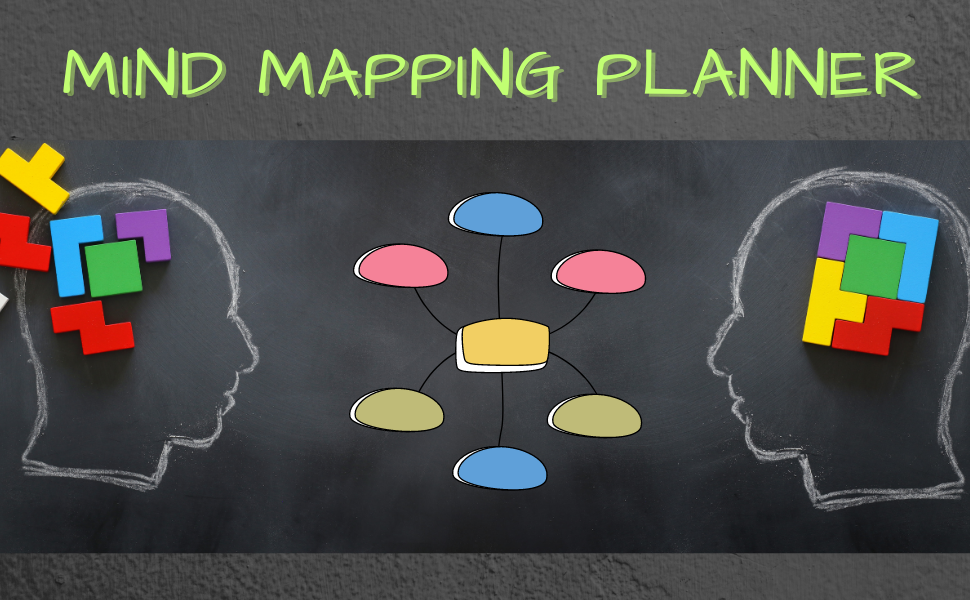
Mind mapping serves as a powerful tool to foster collaboration in team environments. It allows individuals to visualize their thoughts and ideas, creating a shared understanding that enhances group dynamics. By utilizing mind mapping, teams can explore different perspectives, generate creative solutions, and streamline their planning processes. This structured approach not only boosts creativity but also strengthens communication among team members.In a collaborative setting, mind mapping encourages participation and engagement.
It provides a visual framework that makes complex ideas more accessible and comprehensible. This visual representation can significantly improve the quality of discussions during team meetings and workshops, enabling all members to contribute effectively. Furthermore, by integrating online tools, teams can create shared mind maps that facilitate real-time collaboration, regardless of physical location.
Creating Shared Mind Maps Using Online Tools
The process of creating shared mind maps has been significantly simplified through various online platforms. Teams can utilize tools such as MindMeister, Miro, or Lucidchart to collaboratively develop and edit mind maps. These tools offer features that enhance teamwork, such as live editing, comments, and integrations with other productivity applications. To create a shared mind map, consider the following method:
1. Select an Online Mind Mapping Tool
Choose a platform that best meets the team’s needs, such as MindMeister for its user-friendly interface or Miro for its comprehensive collaborative features.
2. Establish a Central Idea
Begin by defining the central theme or topic that the mind map will address, ensuring all team members are aligned on this focus.
3. Invite Team Members
Send invitations to all relevant stakeholders, granting them access to the mind map project. Most tools allow for immediate collaboration.
4. Encourage Contribution
Allow each member to add their ideas and branches to the mind map. Ensure that everyone participates by encouraging input and feedback.
5. Organize Information
As ideas begin to flow, organize them logically by grouping related concepts and creating sub-branches to improve clarity and coherence.
6. Review and Refine
Once the initial brainstorming session is complete, review the mind map collaboratively, making adjustments as necessary to reflect team consensus.Through this method, teams can effectively harness the power of collective thinking, leading to richer ideas and better outcomes.
Benefits of Visual Collaboration During Remote Meetings
Visual collaboration through mind mapping during remote meetings offers numerous advantages that significantly enhance team dynamics and productivity. In remote settings, where physical presence is absent, visual tools help bridge the gap created by distance. The key benefits include:
Improved Clarity
Mind maps provide a visual structure that makes complex ideas easier to comprehend, reducing misunderstandings that often arise in verbal discussions.
Enhanced Engagement
Engaging visuals keep team members focused and involved, fostering a more interactive and participative meeting atmosphere.
Facilitation of Idea Generation
The nonlinear nature of mind mapping encourages free-flowing thoughts, enabling participants to explore innovative ideas without the constraints of traditional lists.
Effective Decision-Making
Visual representation of information allows teams to weigh options more effectively, leading to faster and more informed decision-making.
Documentation of Discussions
Mind maps serve as a visual record of the meeting, capturing key points, action items, and decisions made, which can be referred back to later.Utilizing mind mapping tools during remote meetings ensures that collaboration is not hindered by distance, enabling teams to function cohesively and effectively in an increasingly digital work environment.
Overcoming Common Challenges in Mind Mapping
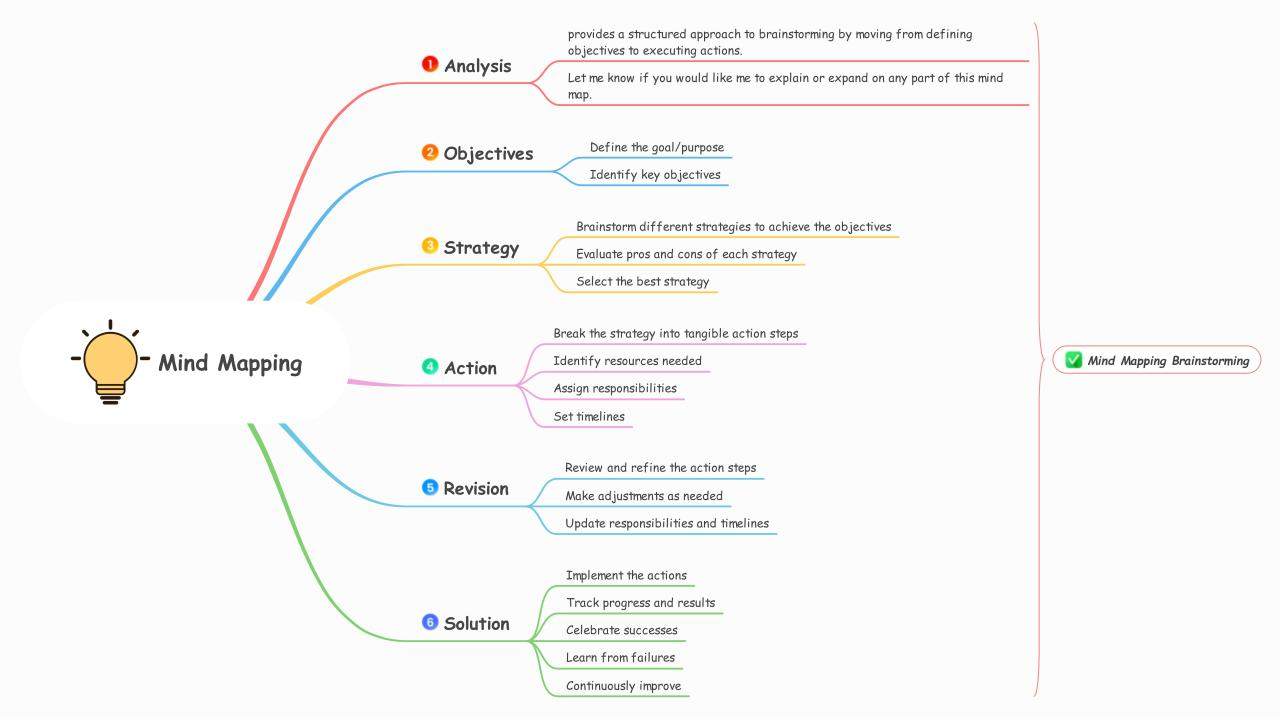
Creating effective mind maps can be a transformative experience, yet individuals often encounter various obstacles that hinder their ability to utilize this powerful tool fully. Understanding these common challenges and implementing strategic solutions is essential for enhancing mind mapping skills and ensuring more productive brainstorming sessions. The following sections detail some prevalent issues, along with practical techniques to overcome them.
Identifying Common Obstacles in Mind Mapping
Several challenges can impede the effectiveness of mind mapping, including:
- Lack of Clarity: Many individuals struggle to articulate their thoughts clearly, leading to cluttered and confusing mind maps.
- Overcomplication: The tendency to add excessive details can overwhelm the mind map, making it difficult to see the central idea.
- Inconsistent Structure: Without a consistent format, mind maps may become disorganized, diminishing their utility.
- Distraction: External distractions or a lack of focus can prevent individuals from fully engaging with the mind mapping process.
Techniques to Improve Mind Mapping Skills
Improving mind mapping skills requires practice and the adoption of specific strategies. Here are some effective techniques:
- Start with a Clear Central Idea: Begin your mind map with a concise statement that encapsulates the main theme. This serves as a guiding star for the entire map.
- Use s: Focus on using s or short phrases instead of long sentences. This approach keeps the map clean and easy to navigate.
- Incorporate Colors and Images: Utilizing colors and imagery can enhance memory retention and make the mind map more visually engaging.
- Regularly Review and Revise: After initial creation, revisit the mind map to refine and reorganize thoughts. This iterative process can help clarify ideas and improve structure.
Maintaining Focus and Clarity While Brainstorming
To maintain focus and clarity during brainstorming sessions with mind maps, consider implementing the following strategies:
- Set a Timer: Allocate specific time slots for brainstorming to encourage rapid idea generation while preventing overthinking.
- Eliminate Distractions: Choose a quiet environment free from interruptions to maximize concentration during mind mapping sessions.
- Use Mind Mapping Software: Digital tools often come with built-in features that can help organize thoughts more effectively than traditional pen-and-paper methods.
- Engage in Group Mind Mapping: Collaborative sessions can yield diverse perspectives and ideas, thus enhancing clarity and focus through shared input.
Case Studies and Success Stories

The application of mind mapping has proven transformative for various organizations and individuals, showcasing its potential to enhance brainstorming and planning processes. Through real-life examples, we can observe the measurable benefits and innovative successes achieved by embracing this technique. One significant case involved a multinational corporation, which implemented mind mapping in its product development department. This approach allowed team members to visualize complex project components, streamline workflows, and foster collaboration.
By using mind maps, they reduced project completion time by 25% while increasing the team’s creative output and overall satisfaction.
Corporate Success Stories
Several organizations have utilized mind mapping to achieve remarkable results in their operations. Here are noteworthy instances:
- Apple Inc.: Renowned for its innovative products, Apple has often employed mind mapping in its brainstorming sessions. The company’s design teams use mind maps to visualize product features and user experiences, ensuring a comprehensive understanding of each project. This has contributed to the launch of several market-leading products that align closely with consumer needs.
- IBM: IBM’s strategic planning teams utilize mind mapping to consolidate ideas and strategies across various departments. By integrating feedback and insights from different stakeholders, IBM has consistently improved its project outcomes and enhanced interdepartmental communication, leading to more cohesive corporate strategies.
- British Airways: This airline has adopted mind mapping in training sessions for staff to bolster customer service skills. By mapping out customer journey scenarios and best practices, employees gain a clearer understanding of expectations and responsibilities, directly impacting customer satisfaction ratings positively.
Individual Transformations
Beyond corporate settings, numerous individuals have reported significant improvements in their brainstorming and planning capabilities through mind mapping. The following examples illustrate personal success stories:
- Student Success: A university student utilized mind mapping to organize complex study materials for exams. By creating visual connections between topics, this student improved retention rates and achieved higher grades, demonstrating the efficacy of mind mapping in academic settings.
- Freelance Writers: Freelancers such as content creators and authors have reported enhanced creativity and productivity after incorporating mind mapping into their writing processes. By visually organizing themes and ideas, they can maintain a clear narrative structure, leading to an increase in client satisfaction and repeat business.
Measurable Outcomes from Effective Mind Mapping
The effectiveness of mind mapping can often be quantified through various metrics, illustrating the tangible benefits of this practice. Organizations and individuals who have adopted mind mapping report improvements across several key performance indicators:
- Increased Productivity: Teams that use mind mapping have documented productivity increases, with many noting a reduction in project timelines of up to 30% due to enhanced clarity and focus.
- Enhanced Creativity: Many users have noted a significant boost in creative thinking, often generating 50% more ideas during brainstorming sessions compared to traditional approaches.
- Improved Collaboration: Organizations have experienced improved teamwork dynamics, with 80% of team members reporting better communication and collaboration after integrating mind mapping into their processes.
These case studies and success stories highlight the broad applicability and substantial benefits of mind mapping in various contexts. By visualizing relationships and organizing thoughts effectively, individuals and organizations can unlock their full potential in brainstorming and planning endeavors.
Ultimate Conclusion
In conclusion, utilizing mind mapping can revolutionize the way we approach brainstorming and planning. By embracing this technique, individuals and organizations can enhance creativity, bolster collaboration, and achieve their goals with greater efficiency. The success stories and practical applications discussed illustrate the power of mind mapping as a tool that not only organizes thoughts but also inspires innovative solutions.